Thứ Ba, 29 tháng 1, 2013
Thứ Bảy, 19 tháng 1, 2013
TÍNH LÃNG MẠN TRONG KIẾN TRÚC LĂNG CỦA CÁC HOÀNG ĐẾ
Võ Thị Kim Thanh1
và Nguyễn Vũ Trọng Thi2.
1Đại
Học Huế
2Nghiên
cứu sinh. Università Politecnica delle Marche, Department
of Construction, Civil Engineering and Architecture, Faculty of Engineering
(Bài viết theo sự đặt bài của Department of Construction, Civil Engineering and Architecture, Faculty of Engineering, Università Politecnica delle Marche. Bản tiếng Việt)
Ý
tưởng xây dựng cho mình một chốn vĩnh hằng vừa tồn giữ quyền uy của đấng thiên
tử, đồng thời đan lồng sự lãng mạn cho tâm hồn thi ca, đã làm cho các nhà vua và
cũng là nhà thơ của Triều Nguyễn hiến cho người đời những công trình kiến trúc
để đời và mãi mãi được chiêm ngưỡng. Những công trình này dành cho du khách những
phút giây vừa tò mò với một di tích, nhưng lại được một cảm giác thư giãn tuyệt
vời khi thả mình giữa chốn không gian tĩnh mịch u hoài với vi vút tiếng thông
reo. Cảm giác đó dường như là sự khác biệt so với khi viếng thăm nhiều di sản
văn hóa khác trên thế giới.
![]() |
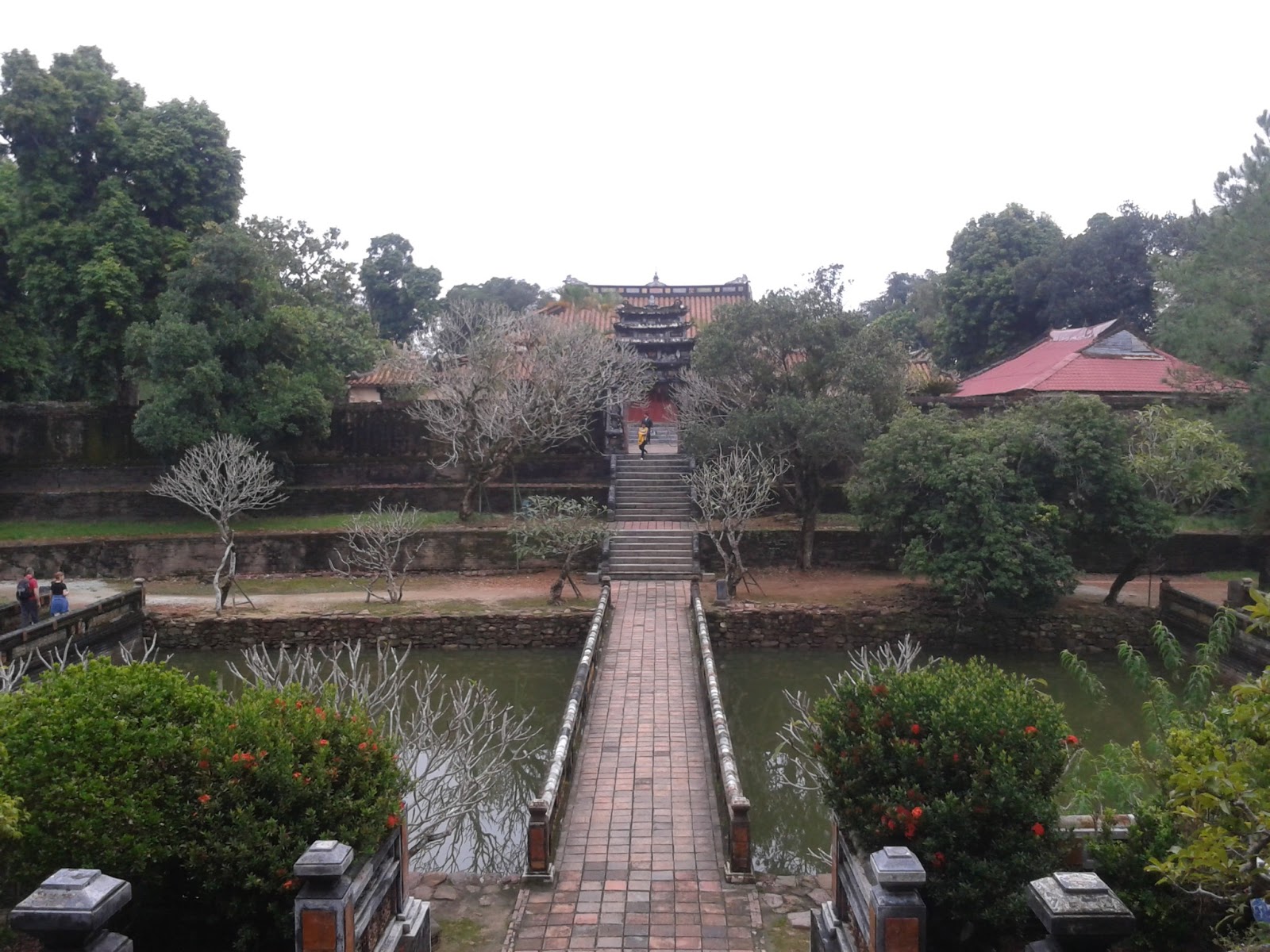
| Hình 1: Đường đến Minh Lâu. Lăng vua Minh Mạng. Ảnh: VTK Thanh |
Chúng tôi không bàn sâu
về lịch sử hay kiến trúc công trình, mà chỉ là những cảm nhận của những người
may mắn sống trên xứ Huế và thường xuyên thăm viếng mà chưa bao giờ thấy mình
đã chiêm ngưỡng và cảm nhận đủ về nguồn tài nguyên tinh thần này.
CÓ MỘT VƯỜN THƯỢNG UYỂN
Ở NGOẠI Ô HUẾ
Hãy để một cuộc viếng
thăm thật nhẩn nha cho lăng của nhà vua Minh Mạng. Ngoài sự tôn nghiêm vốn có của
một chốn hoàng thành, ngoài sự thâm u của một nơi chốn đi về của những linh hồn
mà thực thể đã tan hòa với cát bụi trùng khơi cùng năm tháng, lăng Vua Minh Mạng
cho du khách một cảm giác phiêu lãng tuyệt vời. Dĩ nhiên, các đấng minh quân
tài hoa ngày ấy không nghĩ rằng công trình của mình có một ngày lại trở thành nơi
chiêm ngưỡng, tôn vinh nền văn hóa nước Việt đồng thời là chốn thư giãn sang trọng
cho thiên hạ bốn bể năm châu, người có thân thế cao sang hoàng thân quốc thích
hay thợ thầy chân đất một ngày nghỉ ngơi sau năm tháng gánh gồng. Nhưng điều đó
hôm nay đã hiển nhiên làm cho những công trình chủ thể đổi thay giá trị tinh thần.
Kiến
trúc lăng vua Minh Mạng đã hàng trăm năm tỏa sáng theo ý tưởng của tinh thần
xuyên suốt của 21 năm trị vì đất nước: “Quang Minh Chính Đại”. “Lăng là một quần thể kiến trúc gồm cung điện, lâu đài, đình
tạ được bố trí đăng đối trên một trục dọc
theo đường Thần đạo dài 700m, bắt đầu từ Đại Hồng Môn đến chân La thành sau mộ
vua”[1]. Xen giữa và
bao quanh những công trình kiến trúc đặc trưng của một nơi chốn âm dương giao
hòa của miền vương phủ này là thiên nhiên và
hoa lá. Cứ sau một lần dừng chân cho một biệt điện sơn son
thiếp vàng có kiến trúc đặc biệt dành cho cõi tâm linh u tịch, huyền bí khiến
du khách phải kết nối sự hình dung với dĩ vãng của các bậc Thiên Triều trong sự
tôn ngưỡng, rồi bước ra, là lữ khách được đón chào bởi một không gian tươi rói,
rạng rỡ sắc màu, dẫu cho thời tiết là nắng hay mưa. Nhà thơ đồng thời là đấng
minh vương Minh Mạng với những ý tưởng thiết kế độc đáo, như tung hứng người đời
sau với những cung bậc thăng trầm của cảm xúc khi hân hạnh được bước qua mỗi
không gian thiết kế khúc chiết mà huy hoàng này. Ai đó nói, nhà vua tham vọng
muốn bá chủ cả đất trời trong ý tưởng thiết kế lăng [1], chúng tôi nghĩ rằng, âu
đã làm người, lại là người lãng mạn và yêu thiên nhiên thì hình như ai cũng
mang trong mình tham vọng, không phải là bá chủ, mà là muốn thu tất cả sự lộng
lẫy của vũ trụ vào trong niềm khao khát của mình!
![]() |
| Hình 2: Trục Thần Đạo. Lăng vua Minh Mạng. Ảnh: VTK Thanh |
Cụm từ ‘vườn Thượng Uyển”
cứ âm âm trong tôi mỗi khi ra khỏi một cụm di tích là được đắm mình vào một khoảnh
vườn tươi mát lộng lẫy, giản dị mà sắc màu tươi mươi. Những người quản lý di
tích như đã cảm được hết ý nghĩa của vấn đề này, nên ý tưởng của người dựng nên
cơ đồ được tiếp thêm sức sống bởi những khóm hoa đủ sắc màu rung rinh trong
khuôn viên lấp lánh bởi các ốp ngói âm dương, làm sống động hóa sự huy hoàng rạng
rỡ của Ngự Uyển Hoàng Cung giữa thoang thoảng hương hoa sứ đài các và u hoài.
Ngắm gần, nhìn xa, du khách đều được mãn nhãn bởi một thiên nhiên xanh tươi
trong huyền lâm và thanh thủy. Sự tài hoa trong ý tưởng kiến trúc của vua cha
Minh Mạng dường như được vua con Thiệu Trị từ chữ hiếu mà làm cho tổng thể công
trình được nâng lên về giá trị của sự hoành tráng mà siêu thoát, uy nghiêm mà
phiêu bồng.
![]() |
| Hình 3. Hoa trong “vườn Ngự Uyển”. Ảnh: VTK Thanh |
MỘT CÔNG VIÊN HOÀNG GIA
Nếu Lăng Vua Minh Mạng
được khuôn viên Ngự Uyển làm mềm đi các kiến trúc đăng đối uy nghiêm như một
bài thơ Đường: hay mà nghiêm khắc luật câu chữ, thì Lăng vua Tự Đức được kiến
trúc trong một ý tưởng “mở” như một bài thơ lãng mạn theo thể tự do mà hài hòa
câu tứ. Vốn lăng được xây dựng đồng thời như một nơi vi hành của thơ ca xướng họa,
thư giãn dương trần, làm cho công trình nhẹ đi sự u tịch mà sống động như ông
Hoàng đang còn thấp thoáng đâu đây. Thay vì thẳng tắp như quân lệnh theo đường
Thần đạo thì ở đây con đường đi đến Bửu Thành uốn lượn mềm mại bên triền dòng
Lưu Khiêm. Trong khi phía tả trầm mặc với đền đài miếu mạo thì phía hữu là Tịnh
Khiêm đảo hữu tình, Xung Khiêm Tạ và Dũ Khiêm Tạ duyên dáng soi bóng xuống hồ
sen thơm ngát.
![]() |
| Hình 4. Nghênh Lương Quán. Lăng vua Minh Mạng. Ảnh: VTK Thanh |
Cho đến cuối con đường,
du khách rồi cũng tìm ra được Bửu Thành và Lăng Khiêm Thọ… gọn gàng và giản dị
một cách ngạc nhiên, nơi ngàn thông xao xuyến reo như thầm ru giấc ngàn thu nơi
cuối trời của nhà Vua tinh tú và Lệ Thiên Anh Hoàng Hậu khả ái của Người. Tuy
nhiên phải nhận ra rằng, Vạn Niên Cơ (Khiêm Cung) được xây dựng trên ý tưởng
không chỉ làm khu lăng mộ, mà như một dưỡng đường để đức vua đôi lúc lánh mình
khỏi chốn chánh cung đô hội, vì vậy đây không hẳn là một sự cách điệu trong kiến
trúc lăng như bao sách bút đã truy vấn thảo lược [2], mà thật sự lăng chỉ là một
cụm kiến trúc bao gồm trong dưỡng đường, bắt đầu từ các bậc tam cấp bước lên
Bái Đình. Vì vậy không lạ là chỉ khu vực này mới xây cất bằng gạch, đá kiên cố.
Còn các miếu đền phía ngoài hầu hết được kiến trúc bằng gỗ như trong Hoàng cung.
| Hình 5. Xung Khiêm Tạ. Lăng vua Tự Đức. Ảnh: VTK Thanh |
Cả công trình như một đại
công viên mà ý tưởng tài hoa của kiến trúc sư hòa lẫn với sự thăng hoa của thi
nhân ý chỉ đã hình thành nên. Những công đoạn kiến trúc khiến lữ khách đi hết
ngạc nhiên này đến ngạc nhiên khác. Thuở còn rất trẻ, khi nơi đây chưa là một
điểm du lịch, chúng tôi thường lang thang với ngàn thông vi vút, suối chảy róc
rách, những thân cây đại mỹ miều với những cánh hoa nuột nà vàng mơ dâng tỏa một
làn hương dịu ngọt, chúng tôi ngắm, chúng tôi vẽ, mấy cũng không thấy mình cảm
được hết tuyệt tác đại mỹ quan này.
Tài liệu tham khảo
[2] http://www.hueworldheritage.org.vn/?catid=109&id=214Huế. Tháng 11 năm 2012
Thứ Ba, 13 tháng 11, 2012
The effect on intake digestibility and microbial protein production of adding urea to rice straw for cattle and buffalo calves
http://www.journals.elsevierhealth.com/periodicals/livsci/article/S1871-1413(12)00318-6/abstract
Department of Animal Physiology, University of Agriculture and Forestry, Hue, Thua Thien Hue 84, Vietnam
Received 14 March 2012; received in revised form 11 August 2012; accepted 13 August 2012. published online 10 September 2012.
Abstract
Four cattle calves (Boss indicus) of average weight 120
kg and four swamp buffaloes calves of average weight 220
kg were fed four rice straw diets in a Latin square design. The rice straw were sprayed with 0%, 0.5%, 1% and 2% of urea and givenad libitum. Each period was 15 days during the last 5 days of which urine and faeces were collected. Urine samples were analysed for excretion of purine derivatives (PD) to measure microbial protein production.
There was no significant effect on intake of rice straw which was 3.1, 3.4, 3.1 and 3.1 kg
DM/day for cattle and 4.5, 4.5, 4.5 and 4.6
kg
DM/day for buffalo. Rumen NH3 concentrations were 39, 60, 70 and 96
mg/l for cattle and 51, 81, 102 and 132
mg/l for buffalo with significant difference. However the PD excretion in the urine was not significantly changed being 0.28, 0.19, 0.18 and 0.23
mmol/kg
W0.75 for cattle and as expected lower for buffaloes being 0.13, 0.11, 0.12 and 0.11
mmol/kg
W0.75. The dry matter digestibilities for cattle were 57.1, 60.3, 58.3 and 60.7 while for buffalo the digestibilities were 60.7, 57.4, 59.6 and 60.2.
The results suggest that the rice straw containing 6% protein and digestibility between 57% and 60% provided sufficient crude protein for microbial needs.
Effect of Temperature and Humidity on Heat Stress Responses in Vietnamese Yellow Cattle
http://www.fao.org/docrep/013/i1860e/i1860e.pdf
SUSTAINABLE IMPROVEMENT OF ANIMAL PRODUCTION AND HEALTH
Edited by N.E. Odongo, M. Garcia & G.J. Viljoen
Animal Production and Health Subprogramme
Joint FAO/IAEA Division of Nuclear Techniques in Food and Agriculture,
Department of Nuclear Sciences and Applications,
International Atomic Agency, Vienna, Austria
Food and Agriculture Organization of the United Nations
Rome, 2010
Effect of Temperature and Humidity on Heat Stress Responses in Vietnamese Yellow Cattle
V.T.K. Thanh & W. Shichang
ABSTRACT
Four female cattle (local Yellow breed), eight months of age, were fed a diet of 50% urea-treated and 50% untreated rice straw ad libitum, with free access to water. The levels of ambient temperature/ relative humidity (RH) were random combinations of 25, 29, 35 and 39°C and 70, 80 and 90% RH, achieved in an experimental chamber fitted with air conditioners, heaters and ultrasonic humidifiers. The treatments were based on the natural conditions which frequently occur in an indoor animal house in Central Vietnam in summer. Feed intake decreased linearly while water intake increased with increasing ambient temperature. Heart rate increased in direct proportion to the air temperature but was not affected by RH levels. Body temperature only increased when the chamber temperature reached 39°C and RH was 90%, while respiration rate increased when the ambient temperate exceeded 35°C. Measurements of HSP70 (heat
shock protein, a biochemical stress indicator) from leukocytes using PCR showed that HSP70 was evident when RH reached 90% with an ambient temperature of 25°C, or with an RH of 70% and an ambient
temperature of 39°C.
Key words: Yellow cattle, heat stress, physiology indexes, HSP70.
Differences in adaptation to tropical weather between buffaloes and cattle
http://www.aspajournal.it/index.php/ijas/article/view/ijas.2007.s2.1340
Differences in adaptation to tropical weather between buffaloes and cattle
Vo Thi Kim Thanh1, Wang Shi Chang2
1 Hue University of Agriculture and Forestry. Vietnam
2 Guangxi University, China
Corresponding author: Vo Thi Kim Thanh. Hue University of Agriculture and Forestry. Vietnam.
Submitted: 2010-02-03 16:20:55
Published: 2010-02-03 16:21:04
Search for citations in Google Scholar
Related articles: Google Scholar
Abstract
Twenty buffaloes and twenty Vietnamese yellow cattle from peri-urban Hue city were kept indoor and used for measurement of effect of environmental temperature (To) and humidity (H%). The To and H% were recorded by thermo-hygrometers for temperature and humidity index (THI) measurement. Breathing rate was observed by moving rate of diaphragm, heart beat rhythms was calculated by stethoscope around 3 to 4 ribs and body To tested by 42oC thermo-meters in animal rectums. The results showed that the To in the area studied varied widely during the day and when To increased H% often decreased. During the study period the average To changed from 24oC in February to 39oC in May. The H% varied from 57 to 86. The environmental To and H% had very little effect on body To for both types of animals (37oC to 39oC) but there were changes in heart beat from 42 to 45 in cattle but from 44 to 57 in buffaloes. In warmest period with high H% (THI 83) breathing rates in cattle varied from 18 to 21 while in buffaloes from 20 to 35 and in May it increased to 50. At the warmest time of the day the heart beat in cattle were 42 while in buffaloes 57. The breathing rate in cattle only increased when ambient To was above 39 degrees. The results clearly showed that buffaloes were easily stressed when To and H% increased. Buffaloes need water and swamps to help to avoid heat stress while indigenous cattle are much better adapted to high environmental To and H%.
Key words: Temperature, Humidity, Buffaloes, Cattle.
Physiological mechanism of low purine derivative excretion in urine of buffaloes compared with Bos taurus cattle
A
Animal Production Science 49(11) 994–997 http://dx.doi.org/10.1071/EA08287
Submitted: 24 November 2008 Accepted: 26 May 2009 Published online: 14 October 2009
AbstractSubmitted: 24 November 2008 Accepted: 26 May 2009 Published online: 14 October 2009
Three cattle calves (Bos taurus) and three buffalo calves (Bos bubalus) were weaned after receiving colostrum and then reared on bottle-fed milk. During the first month the animals did not have access to solid food. Urinary purine derivative concentration (PD), basal PD excretion and glomerular filtrate rate (GFR) were determined during fasting and feeding. After 1 month the animals were given access to solid feed (urea-treated rice straw 80% and molasses 20%) to stimulate rumen development. At 3 months of age, while the solid food was given, urinary PD, basal PD excretion and GFR were again determined.
Urinary PD excretion both during fasting and milk feeding did not differ significantly between buffaloes and cattle during the milk-feeding period (P > 0.05), but there were highly significant (P < 0.01) differences between cattle and buffaloes after 3 months of age and 2 months of access to solid feed (P< 0.01). The GFR was lower in buffaloes than cattle in both the milk-fed and solid-feed periods (P < 0.05).
It is suggested that the differences between buffaloes and cattle are due to differences in GFR as PD will stay longer in the blood and thus provide a greater possibility for recycling to the rumen. This, however, needs further confirmation. Whether permeability of PD from blood to rumen is an additional factor is not known.
Thứ Hai, 8 tháng 10, 2012
Causes of differences in urinary excretion of purine derivatives in buffaloes and cattle
(http://journals.cambridge.org/action/displayIssue?iid=779256)
(http://journals.cambridge.org/action/displayAbstract?fromPage=online&aid=779404&fulltextType=RA&fileId=S1357729806000439)
Vo Thi Kim Thanha1 and E. R. Ørskova2 c1
a1 Hue University of Agriculture and Forestry, 102 Phung Hung, Hue, Vietnama2 Macaulay Institute, Craigiebuckler, Aberdeen, AB15 8QH, UK
Abstract
In
experiment 1, three male calves of Vietnamese cattle and three
maleVietnamese swamp buffalo calves were weaned after receiving
colostrum and reared by bottle feeding of milk. During the 1st month the
animal did not have access to solid food. Urine was collected to
determine differences in endogenous excretion of purine between the two
types of animal. After that they were given access to equal amount of
solid food for 2 months to stimulate rumen development, urine was again
collected to determine the differences in purine excretion. In
experiment 2, the same animals were given milk mixed with purines in
three treatments (0, 1·7 and 3·4 g/day). The same animals were used in
experiment 3 for intravenous allantoin infusion, to test the effect of
purines themselves introduced into the plasma.The results showed that in
period 1 of experiment 1 there was no significant difference in purine
excretion between the two types of animal. The excretion being 0·65
mmol/kg M 0·75 for cattle and 0·69 mmol/kg M 0·75for
buffaloes calves, respectively. For period 2, after rumen development
there were significant differences between two types of animal. The
excretion from buffaloes (0·26 mmol/kg M0·75) being less than half that of cattle (0·69 mmol/kg M 0·75).In experiment 2 the regression of purine excretion mmol/day (y) was y=0·6279x+9·1496 for cattle calves and y=0·2618x+5·8594
for buffalo calves where x was the purine given.In experiment 3, from
each mmol of allantoin infusion, the recovery was about 0·70 in cattle
but only half (0·32) in buffaloes ( P<0·01).It is clearly
shown that the difference in purine derivative excretion occur only
after rumen development It is suggested that glomerular filtration rate
may be lower in buffaloes than cattle leaving more time in the blood
thus more time for recycling to the rumen and metabolized by bacteria or
the permeability from the blood to the rumen is greater in buffaloes
than cattle.
(Received July 07 2005)
(Accepted December 29 2005)
Key words
- buffaloes;
- cattle;
- purines;
- rumen
Đăng ký:
Bài đăng (Atom)